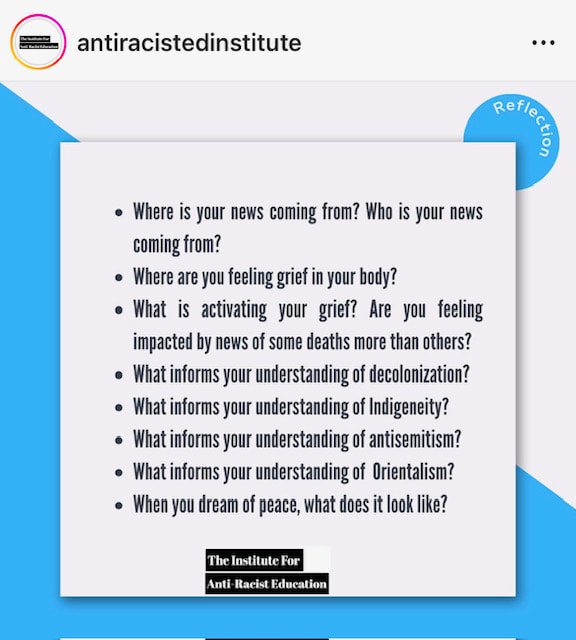
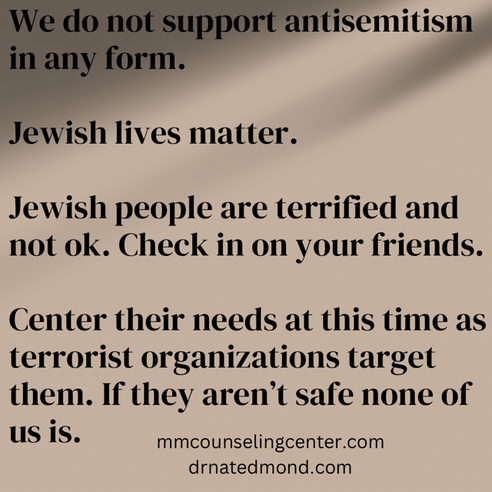
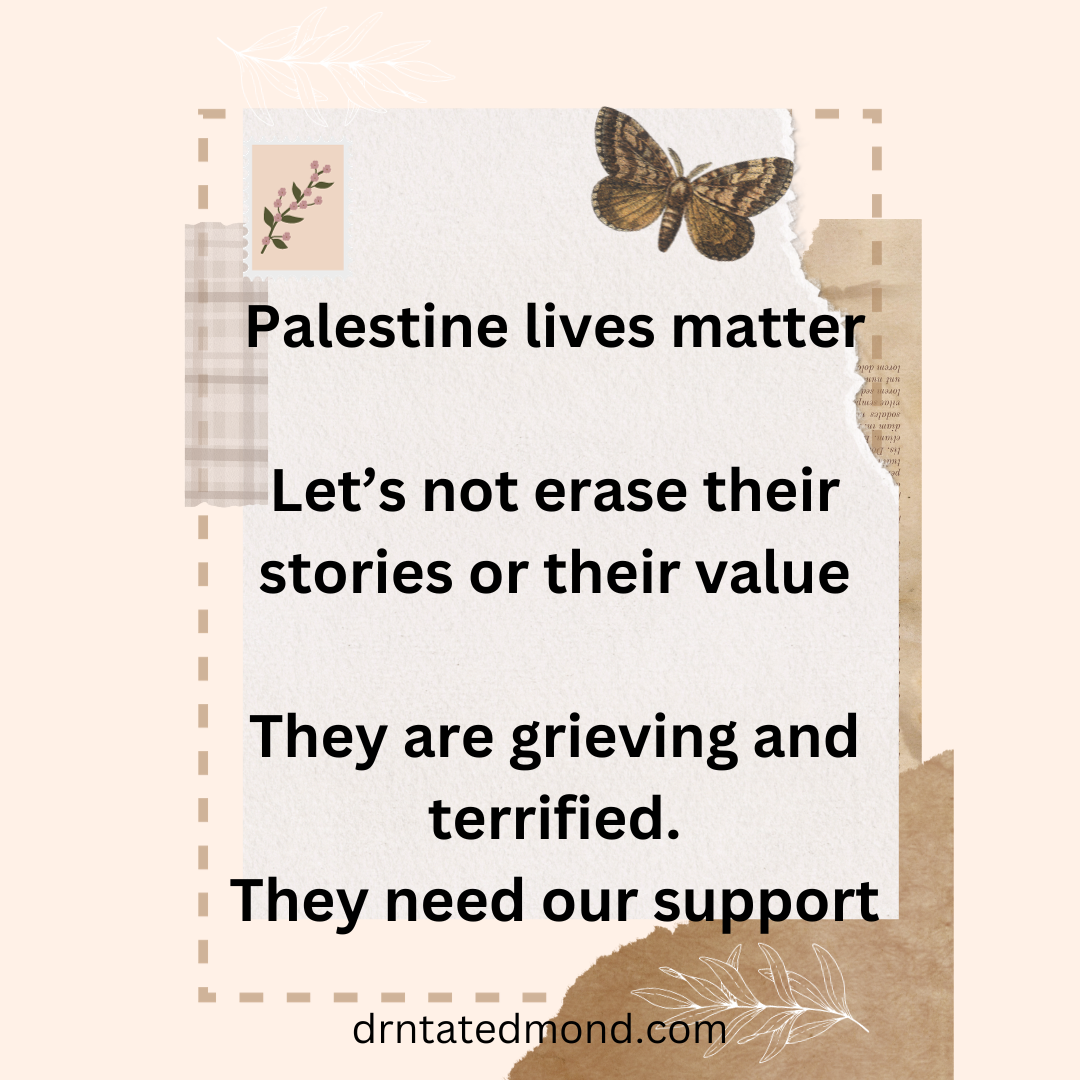
 What an emotional week. Sifting through posts about Indigenous Peoples day vs Columbus day. Digesting and metabolizing the horrific violence and terrorizing that is happening in the Israel-Palestine war creating more intergenerational trauma. I saw this graphic above from the Antiracist Institute that I appreciated as mindful/meditative inquiry. I have been reflecting this week about my tendency to avoid talking about things that could be perceived as antisemitic. Some of that has to do with polarizing exchanges I have had with people during antiracism workshops or consultations, some of that has to do with ignorance, and some of that has to do with the comfort that comes with silence. So I posted inside my membership community because that is my "safe space" and silence is really loud and I remember the silence around Black Lives Matter. Here is my little prayer because my spirituality and my anti-oppression roots for everyone to be liberated and I have capacity to hold compassion for individuals while condemning atrocities and asking people to be accountable. That is really hard to do when in emotion mind and your people are being hunted and targeted. I hope that Jewish people feel validated in their pain and trauma and have the supports they need to see them through this devastating time. I hope that they can feel safe again soon. I wish for an immediate end to all forms of anti-semitism. I hope that Indigenous people are humanized and have an opportunity for their own sovereignty and have their land returned to them and/or reparations paid. I wish this for Palestinian people as well. I hope that Palestinian people feel validated in their pain and trauma and have the supports they need to see them through this devastating time. I hope that they feel safe again soon. I hope that people can separate the acts of a terrorist group like Hamas from the larger Palestinian population. I grieve for all the lives and souls lost. I hope that everyone gets their needs met in a way that doesn't require the oppression or subjugation of other people. May the people of Ukraine and other countries that are experiencing war and oppression that may not be visible in the news be supported. I hope that the words antiracism, antisemitism, racism, dialectics are not weaponized as the weaponization of these words keeps us from having deeper conversations and building bridges towards collective liberation. I hope for accountability and reparations for all forms of violence that have happened currently and in our collective history. I hope that we continue to decolonize. I hope that we all keep trying to learn more, do more, and support each other in activism and healing. As Norma Johnson says "silence is not quiet y'all". May we all embody antiracism and anti-oppression in our daily lives and be honest with ourselves when we are not able or willing to do that. Learn more about upcoming trainings with Dr. Edmond.
Dr. Colleen and I recorded a new podcast episode called "lean into the hard". I wish we had talked about the above but we weren't there in our journey yet at the beginning of the week. Podcast is available wherever you listen to podcasts and on youtube. Updated on 10/23/23 with new episode (13) of the podcast which addresses the topic.
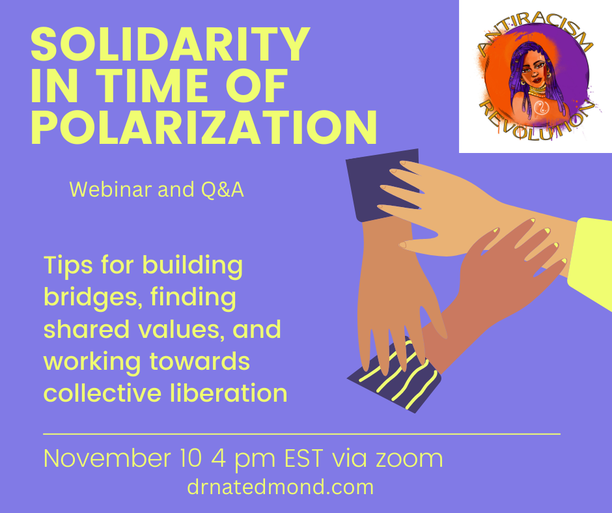 We are living in a time where there are polarizing views on so many topics. Perhaps you have become skilled in avoiding conversations with people who have very different opinions from you. Perhaps the social media algorithm keeps you from seeing opposing views. Perhaps you find yourself activated into fight, flight, freeze, fawn/submit/collapse when you get triggered. Let's take a mindful moment and see/feel all the different ways we process information. What arises for you when you are in a conflictual conversation. 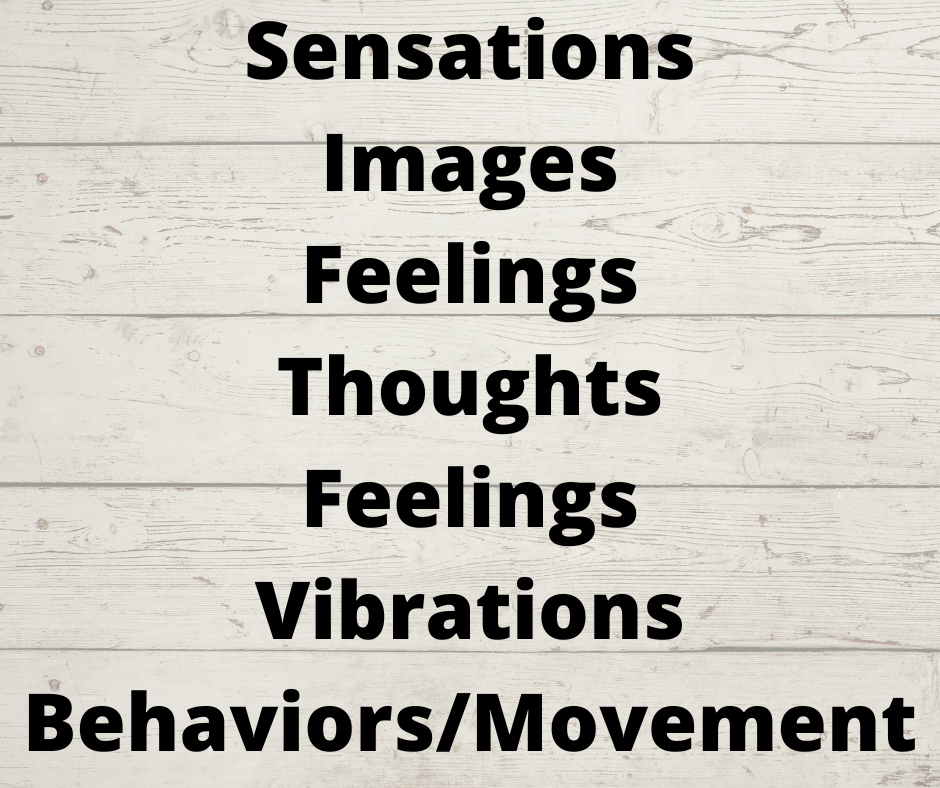 I was invited to talk about antiracism in an interview. I didn't do any prep for the conversation so had no idea I was meeting with a Black, cis male, heterosexual, Christian, ultra conservative individual. Check out the video. Notice what comes up for you. While it was a challenging interview I appreciate that people who wouldn't normally hear me got to hear a more nuanced conversation about racism, queerness, and antiracism. Many years of regulating my nervous system, meditation, digesting content around antiracism and finding ways to turn towards compassion helped me through this conversation. What helps you turn towards the difficult, disrupt systems of oppression, call people in in a non shaming way? My Antiracism Revolution membership community is about how do we embody both fierceness and love. Fierceness is about feeling, learning history and how racism is embedded in our present day institutions and culture, and not being silent. Love is about how do we heal and move around in the world disrupting racism and the centrality of whiteness. Check out the video below and see what arises for you. Pay attention to the six intelligences (sensations, images, feelings, thoughts, vibrations, and behaviors/action urges/movement). Want to build the capacity to have conversations across difference? Join Antiracism Revolution. Learn more here.
The more I do antiracism work the more I am drawn to abolitionist thinking and reimagining a world where every life matters, everyone has an opportunity to thrive and there is collective liberation. The prison industrial complex is abolished, cancel culture is gone and we have a path to compassionately hold people accountable for harm/isms while also giving them a path to redemption and reparations. We have the capacity to hold intense feelings, talk about hard things in an embodied way and all heal from racial harm. What do you imagine? At the same time I am aware that racism will never end because it is embedded in every institution. It is in the air that we breathe. That realization can sometimes feel overwhelmed or disheartening and then I remember the words of Mariame Kaba: "Hope is a discipline". You have to work at having hope again and again; find your inspiration. Work to reduce harm and build up communities of resilience. I was watching my favorite movie, Remember the Titans, with my 14 year old son recently. Why do I love this movie? It tells the story of a high school football team that is experiencing forced racial integration in the early 1970s and how by working together and building personal relationships they were able to heal/change their racial conditioning. I love these movies that spark hope about people's ability to change and heal in the context of relationships. The reality is that most of the US is still highly segregated so that many people don't build meaningful relationships with people racially different than them where authentic and messy conversations about race can occur so we move around in the world with lots of prejudice, white body supremacy and antiblackness. So we are watching this movie and one of the high school players was overtly racist and not willing to change his beliefs and his racist beliefs led to physical and emotional harm. I called him a racist and my son turns to me and says why are you calling him a racist rather than saying that he has been conditioned by a racist society (which is what I have taught him). I said because for that time period his overt actions of harm are based on racism. He believes in white superiority and the inferiority of black people. I have found in the last year or two it is not helpful to call most people racist. It seems to shut down conversation, simplify what I am trying to communicate and racism has many different levels given we have all been socialized by racist forces. Most white people I encounter don't meet the traditional criteria for being an overt racist. Until we create a paradigm where there is a path for redemption and repair when you are called out as a racist I don't know how many people are able to face that truth and do better. Cancel culture is part of white supremacy culture. We can do better to hold people accountable and support them in their transformation. My son is often calling out/calling in white peers who use the n word. I had to work with him to have a more nuanced conversation with peers about why white people should never use the n word as he was calling everyone racist. I want him to hold is outrage and keep calling people into these messy conversations about race while not dehumanizing them. How are you cultivating messy conversations about race? How are you exploring your racist conditioning? How does antiblackness still show up in everyday life? What is inspiring hope for you in your daily life to sustain your antiracism work? Check out my webinar on critical race theory. Rather than polarizing people it can provide a path for healing from racial harm.
 Learn more about ways to keep learning in community here. Explore yourself as a racial being with dedicated and aspiring antiracists in Antiracism Revolution membership community.
Dr. Nathalie Edmond's resources and social media: https://linktr.ee/drnatedmond 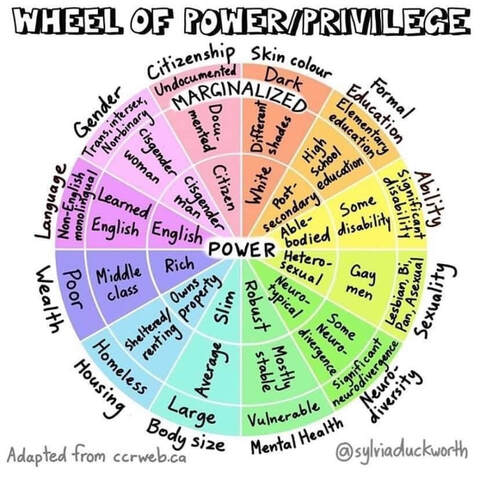 What if we all bought into the idea that we are biased? Our different identities and the life experiences we have had create our unique signature of bias. When I reflect on the power and privilege wheel above I count that I have 7-8 privileged identities even though I live in a black female body. This lens or filter impacts how people view me and how I view the world. Our brain sometimes likes to create efficiencies where it accumulates information that we can access when we need it. I have begun to think of my brain as a filing cabinet of information about different things. The goal in anti-oppression work is not to get rid of the filing cabinets of information so that we all become color blind and are no longer able to celebrate differences. The filing cabinets of information can help us be more culturally sensitive and we also risk reducing people to stereotypes if we our filing cabinets have limited information in them. What if we expanded what was in our filing cabinets of information. For Black history month this year I was sharing a Black Joy Manifesto video in my workshops. I wanted to celebrate not only stories of Black trauma, pain, oppression and stories of resilience but many different images of various kinds of Black people experiencing joy. Too many of us don’t get exposed to enough images of that. When I think about White people I know that my filing cabinets of information is varied. Books, movies, news, education classes provide me a wide variety of representation so that my filing my cabinet is not stereotypical. Can you say the same about various different BIPOC (Black, Indigenous or People of Color) groups? What’s in your filing cabinet of information about groups that tend to be marginalized? If we don’t expand what is in our filing cabinet we can’t help but walk around with stereotypes which leads to implicit bias which leads to microaggressions. All of this does harm on a daily basis. This is the more subtle form of racism. Sometimes we can expand our filing cabinets of information by developing meaningful relationships with people who are different from us but sometimes that is not possible so we can seek out information that centers their voices and stories. Once we expand our filing cabinets of information about various groups of people we can start doing a power analysis. I appreciate the way that Sonia Renee Taylor (see video below) and Resmaa Menakem talk about white body supremacy. It’s the idea that the white body sits on the top of the hierarchy and the black body sits on the bottom of the hierarchy. We can see the parallels to a caste system where people at the top of the hierarchy have greater institutional power and hence privilege. The closer you are in proximity to white bodies the higher you rise on the ladder though there is likely a ceiling, only so far you can go on the hierarchy if you do not live in a white body. There are other oppressed identities you can hold such as being in a female body or gender nonconforming body that can bring you lower in the hierarchy even if you are in a white body. Other oppressed identities that can intersect with whiteness to bring you lower on the body: queerness, non Christian identity, disability, neurotypical brains, bigger bodies, not being a U.S. citizen or being a native English speaker. When doing anti-oppression work and trying to be an ally, trying to be culturally humble or have more effective conversations with people about topics such as race we have to do a power analysis. Power analysis involves looking at where you fall on the body hierarchy. This graph below of power and privilege shows some identities that tend to be dominant in terms of institutional power and those that tend to be marginalized or oppressed. The identities at the center have the most institutional power and hence are higher on the ladder.
Try it out for yourself. Create a ladder. If you are white presenting put yourself at the top of the ladder. If you have other identities that tend to be oppressed lower yourself on the ladder. Now imagine you are talking to someone about race and racism, where do they fall on the ladder. The person who has an area of domination related to race works to decenter themselves when talking about race and listen to those lower on the ladder because they likely experience a higher degree of oppression. If both individuals are part of a marginalized racial group the person with the lighter skin tone is higher on the ladder because of proximity to white body supremacy. Some of us have marginalized identities that are not visible unless we disclose them, that puts us higher on the ladder. Some of us have multiple marginalized identities so we are lower on the ladder. If we think about intersectionality of identities, coined by Kimberle Crenshaw, the individuals at the bottom of the ladder are those in black bodies, queer, trans or gender nonconforming, poor, disabled, and fat. We want to center the voices of the most marginalized. If the people at the bottom of the ladder feel like their lives matter, institutionally in terms of policies and access as well as personally, than all lives truly matter and the ladder collapses. Check out this tasks about the tasks of the privileged and the tasks of the subjugated as described by Dr. Kenneth Hardy. Want to learn more about being anti-racist check out resources here. Reach out to Dr. Nathalie Edmond for additional trainings or email her. 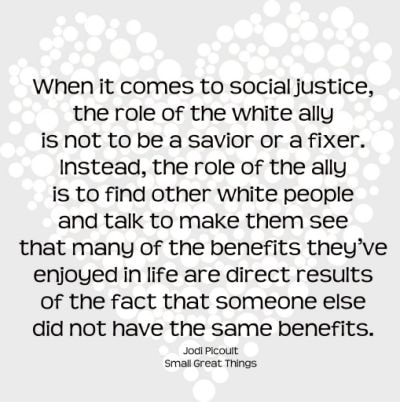 What I saw this year (2020) was an awakening in many white people who felt some sadness, anger, guilt and/or shame around racial injustice towards black people. I saw them posting support for black lives matter and calling out friends and family who they felt were not understanding the pain of black people not just year but over the course of generations. I also saw many white people who were good intentioned but didn’t know what to do to help with the movement. They were afraid to center themselves or reach out to their black friends and potentially burden them. I also saw white people who too on the role of white saviors rather than centering the experiences of BIPOC (black, indigenous, and people of color) individuals, platforms and organizations. I also saw a lot of shaming and aggression directed towards Trump supporters without looking at one’s own complicitness in white supremacy and white silence and the ways in which one has benefited from white privilege. I saw very little vulnerability and a lot of intensity. Intensity without intimacy isn’t going to heal the collective. We can’t cast away a new group of people as we have done for so many hundreds of years (i.e. colonialism and capitalism). I have had the privilege to take many a workshop from Dr. Kenneth Hardy, a black psychologist, who talks about racial trauma and how to have healthy racial dialogues. I have run many antiracism workshops for mental health practices, yoga students and teachers in training, small businesses, nonprofits and countless community based programs. The reality is that you can be a good white person who loves black people without challenging the systems of oppression and racist forces. These are some of my takeaways for budding white allies/accomplices.
Notice where you are now. Be kind and compassionate towards yourself while being fierce in uncovering all that you have learned that interferes with you having racial responsibility to dismantle white supremacy and other systems of oppression. Want to dive deeper? Check out the anti-racism resources (therapists) or antiracism resources (non therapists), listen to a podcast. Sign up for anti-racism coaching individually with Dr. Nathalie Edmond, schedule a training for your team or community, or sign up for an upcoming anti-racism series. Here is anti-racism assessment you can complete to check out your growing edges in becoming an ally.
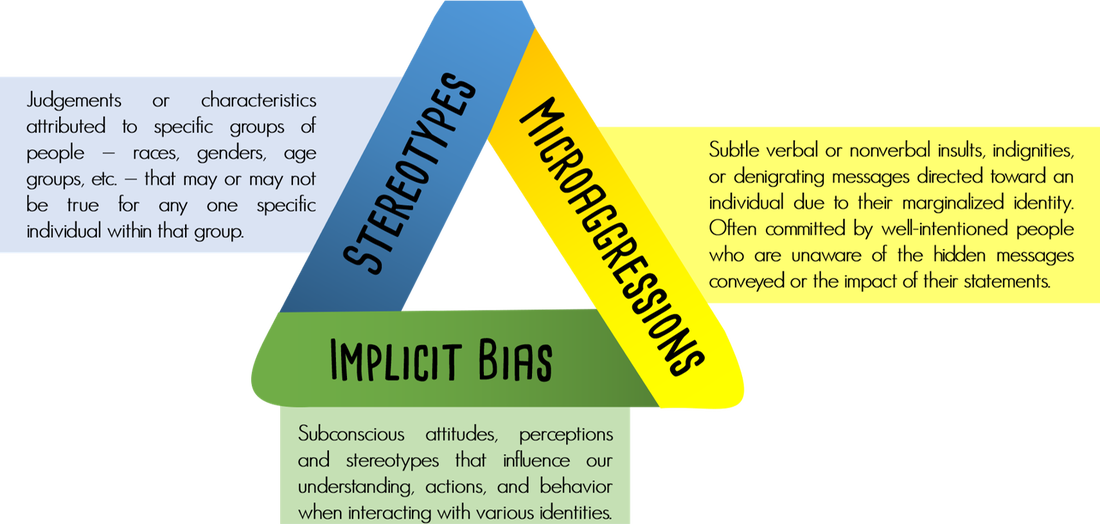 So often when we think about racism we think about overt acts of racism such as verbal and physical violence against BIPOC (Black, Indigenous, and People of Color), as well as systemic racism that shows up in mass incarceration, unequal access to higher education and certain jobs as well as the long time legacy of red lining which impacts current access to wealth. I heard someone say post-election "now we can go back to regular racism". As a Black female presenting person who grew up in a two-parent middle class home in New York/New Jersey I experienced few overt acts of racism. Though my parents were from Haiti and came her in adolescence and young adulthood they quickly were indoctrinated into the hierarchy of race in this country. They raised me to shy away from African American culture because of the way it was negatively regarded, and they worried that any association to it would create more barriers to success. I have gone to schools in predominantly BIPOC areas as well as predominantly white areas. I have been reflecting on the stress of navigating predominantly white areas for much of my life. I have many white friends and for the most part have been very kind to me and polite and yet until the last decade there were few meaningful conversations about race. Colorblindness was what I grew up in and was the norm for many decades. I can remember people in high school not describing me as black even though that would have been the best descriptor for me if you were going to pick me out in a crowd. I blended. Blending was my survival strategy. Blending and becoming the model minority is pretty common. Many BIPOC people are so good at this that White identifying people do not realize that BIPOC people have transformed themselves into a version that can assimilate into predominantly white spaces. That assimilation translates to: not appearing threatening, being professional, not adhering to any stereotypical assumptions about the marginalized identity, not being fully seen. The question is what did it take for me to blend, to assimilate into predominantly white spaces. What parts of myself did I have to leave at the door? What was the consequence when I did bring more of myself to work? What was it like to not see enough magazine covers, tv actresses, book characters, dolls reflect my skin color? It led to me internalizing some anti-black notions around standards of beauty and what kinds of occupations black presenting individuals could have. When I did see black characters on tv and movies they often inhabited stereotypical roles that I could not relate to. What are the long term consequences of internalized racism and/or colorblindness? What are the many ways that racism shows up in daily life. Microaggresions are much more subtle and common experiences of racism in the world. Gerald Wing Sue does a lot of research on microaggressions. Microaggressions are subtle verbal or nonverbal insults, microassaults, indignities, and denigrating messages directed towards an individual based on their marginalized identity. It is often done by well-intentioned people who are not aware of their implicit bias (unconscious stereotypes and assumptions about others). Some describe microaggressions as deaths by a thousand little cuts. The person experiencing microaggressions often is caught off guard and wonders if they heard correctly. There can be doubt as well as uncertainty about how to address the microaggression because the comment or behavior is usually subtle. There may be worry that addressing the microaggression might give the appearance of being too sensitive or emotional (i.e. I don’t want to be seen as the angry black woman). Often these microaggressions are suppressed and yet still can cause a stress reaction and accumulate over time. There is a risk no matter what. You either risk environmental response by saying something or risk losing part of yourself by not saying anything. Chronic voicelessness can lead to rage, shame, grief, depression, disconnection with how you really feel, lack of authenticity as well as physical health problems. How do you begin to uncover your own unconscious biases so that you do less harm to others who hold a marginalized identity? If you hold a marginalized identity, how do you care for yourself in ways that honors your full self and feelings. What is the harm of raising another generation of White people who are colorblind, lack racial literacy, do not have the language to talk about race in a meaningful way, and continue to commit microaggressions? What would it mean to allow more people to take up space without our biases trying to contain them into what we think is professional or acceptable. Want to learn more? Want to be an anti-racism parent, therapist, manger, business owner, human being? Sign up for upcoming anti-racism training. Schedule a training for your team or community with Dr. Nathalie Edmond. Check out anti-racism resources. 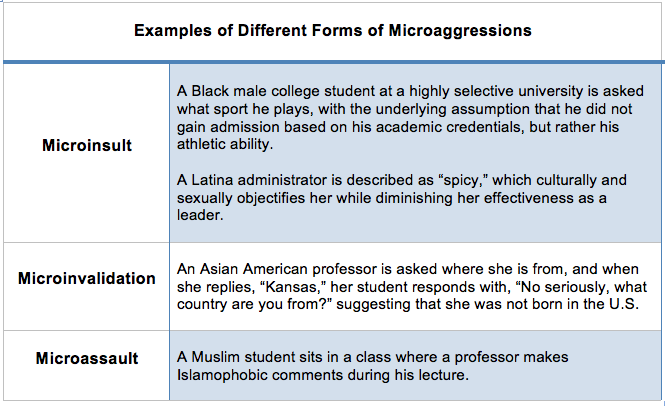 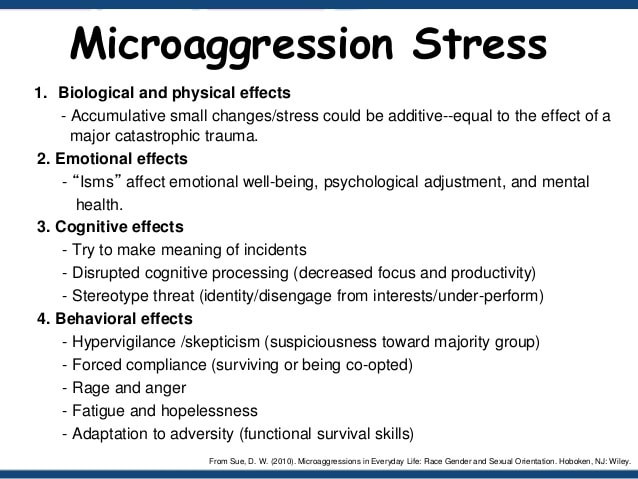 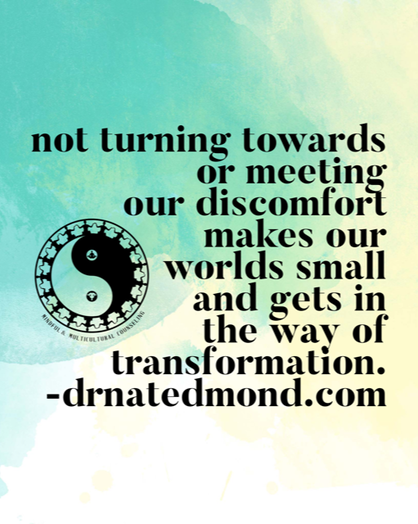 We are living in a time of two pandemics- racial injustice and Covid-19. This year has shed a light about many structural inequities based on intersection of race and class. Some of us are awakening to how much we did not know about the realities of black and brown lives- the notion that the United States was founded on white supremacy and that persists today in implicit and explicit bias. Resmaa Menakem talks about how simply being born in a non-white body is a traumatic experience. Just as we are gendered from an early age we are racialized. Certain doors are closed and certain assumptions are made about individuals simply based on the color of their skin. On top of all that we have seen the deaths of loved ones and heroes. We may have lost our jobs, our homes, our regular routines. Things that once used to anchor us have become unsteady or been removed. We are experiencing a collective trauma. Trauma is anything that overwhelms our nervous system and mind. It often brings up the sense of being frightened. We unconsciously move into fight, flight, or freeze/shut down to cope. We lose capacity to fully think, have compassion for others, find gratitude, or see each others full humanity. Typical trauma symptoms are depression, anxiety, engaging in numbing behaviors, rage, irritability, despair, difficulty with sleep, loss of motivation, feelings of shame, hopelessness, eating too little or too much, shutting down. We have become even more polarized as a country. Many people are terrified about the upcoming election and who will be the next supreme court justice. I invite you to not turn away from your discomfort, from your not knowing. To not stay in despair or terror for long. This is an opportunity. An opportunity to explore what is coming up for us. What traumas have we experienced in our lives? What is our body trying to tell us? What are wounds within me that I have not touched or cared for tenderly? What is the body remembering of feeling scared, not feeling heard, not feeling seen, not being in control? This is an opportunity to find something to ground in. Perhaps the anchor is faith, our ancestors who have been through difficult times before, perhaps it is a spiritual practice. Can we remember to breathe into this moment exactly as it is. Noticing the tendency of the mind to travel to the future and create catastrophic possibilities. A reminder to come back to the present moment again and again. I heard Thomas Hubl say: “Are you willing to take a step when there is no floor? When you take a step the floor appears.” If we keep turning away from our pain our world becomes smaller and we lose opportunity to transform, to evolve, to increase our capacity to tolerate not knowing and discomfort. We can gain clarity over time. Can we find community to help support us on this confusing journey. Community can help us expand rather than contract. Beautiful things can arise from the ashes, from the mess especially when we support each other through it. Can we grieve together? I offer you this meditation that has been inspired by a book I read years ago by Sylvia Boorstein called “Happiness is an inside job”. Please be tender with yourself: Sweetheart. I know you are in pain. Relax. Take a breath. Check in with what is happening inside of you and outside of you. Take your time. When you are ready we will figure out what to do. What I love about this meditation is that it has all the qualities of a grounding, compassionate practice. Refer to yourself by some sort of nickname, perhaps naming your inner child. Acknowledge that you are in pain. Invite in ease and softening. Take several conscious breaths to help calm our nervous system. Check in with how your body is talking to you, what are the images and thoughts coming and going. What is happening around you. No need to rush this process. Trust that when you are ready you will know how to proceed. What gives me hope is that if more and more people are connecting to the collective grief and trauma that has been going on in this country for hundreds of years things have to change. Old structures cannot persist if we keep putting one foot in front of the other. We can be tender with ourselves and each other while still being fierce in our pursuit of justice for all. How do we all get free. Join me in an upcoming workshop to dive deeper into trauma sensitive yoga, anti-racism, or meditation as a self-care practice. More info available here. 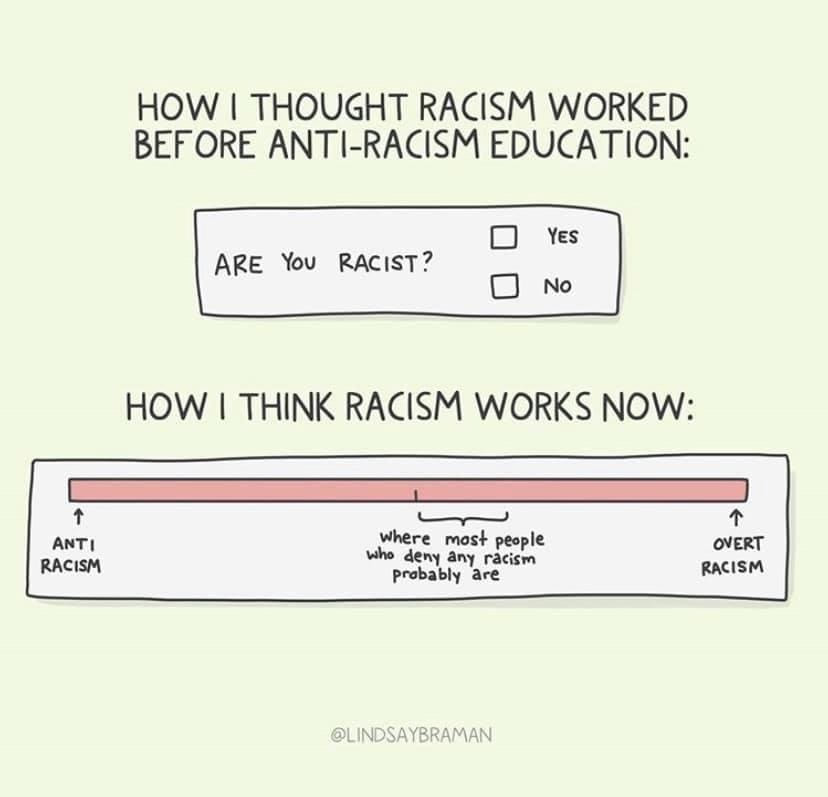 Have you heard about "anti-racism" recently?In the last few months we have seen a centering of the ways systemic racism affects Black and Latinx communities in a different way. Especially when it comes to higher proportion of deaths by COIVD, police brutality, healthy and economic inequities. We have heard and seen black grief and rage and may not understand the trans-generational and cumulative impact of 400 hundred years of discrimination because we likely grew up in the time of color blindness. You may have only recently heard the phrase "anti-racism". Making Your Therapy Practice More Anti-RacistYou likely have been wondering how you can be more of an anti-racist practice. Of course, you feel for the BIPOC (black, indigenous, and people of color) communities. You support the premise of Black Lives Matter [too] and care about diversity, equity and inclusion in your practice. You have often thought I am not a racist, but have begun thinking are you anti-racist? What does it actually mean to be anti-racist? It is taking an active stance against racism. To be “not a racist” is a stance of neutrality. It is often being indifferent or minimizing the legacy of white supremacy in this country that supports the white supremacy system continuing. Check out my other blog post about white supremacy and history of racist policies. The reality is we are all indoctrinated and conditioned into white supremacy [the system that creates white privilege]. We likely learned a Eurocentric curriculum in school. We might have grown up or currently live in segregated areas. We went to graduate school and learned therapy models that centered white, cis, male, heterosexual, able bodied, neurotypical, Christian, upper middle class theories of understanding human behavior, culture and therapy. 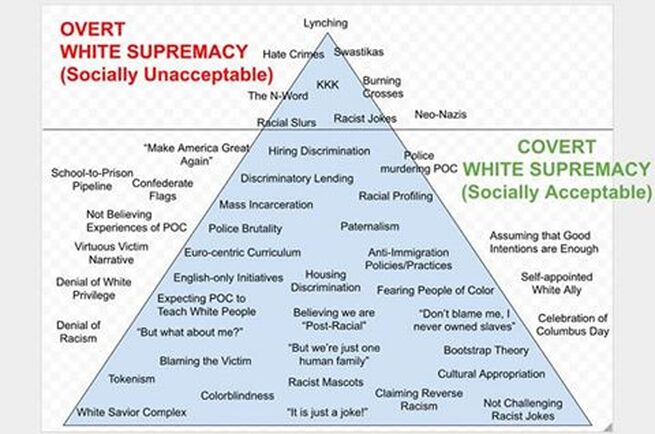 Unlearning Racism to Embrace Racial Justice and Anti-RacismWe have an opportunity to unlearn racist ideas but first we must deconstruct our current paradigm that centers whiteness without naming whiteness. We have to lift the veil and make visible what has been invisible. There are a lot of different anti-racist or diversity, equity and inclusion options out there. Why is mine different? I really embrace a paradigm shift for everyone (no matter what your race is or how you have been an ally in the past). I bring a mindfulness lens to all trainings and conversations along with a clinical background. As a black licensed clinical psychologist who is also a yoga teacher and somatically trained, married to a cis white man, raising bi-racial children who has worked in community mental health, been a clinical and administrative director at partial hospital, intensive outpatient and inpatient programs, worked in college counseling center and owns a group practice I have seen the ways anti-racism is rarely embraced as a value in a way that transforms a culture. white supremacy and racism lives in our bodiesWe bring those bodies into our therapy rooms and our bodies talk to each other. When we talk about racism we have to do it not only from a cognitive place but also a fully embodied stance so true transformation can occur. We have to understand how implicit bias takes root unconsciously and how our bodies react first and then the mind follows. We have to learn to settle our bodies (engage our ventral vagal nerve) as Resmaa Menakem talks about. Learning about different cultures (cultural competence) is great and yet not enough if our paradigm doesn’t shift and reduce our implicit bias. We have to embrace cultural humility, a recognition that we often don't know and will always be learning. How do we move away from centering whiteness as the norm?How do we create truly inclusive spaces- spaces that welcome the intersectionality of identities, that affirm the inherent worth and dignity of all beings. How do you start to critically analyze from an anti-racist lens and do a power analysis? How do you recognize the barriers to having productive, embodied discussions about race? Who do your websites and marketing materials speak to? What is not explicitly stated? Where is your practice located and who can easily access your services? What is your payor mix? How do you hire and retain BIPOC clinicians? How do you partner and become an ally for BIOPC communities from a genuine place rather than a performative place? How do you hold space for black rage and grief as well as the intergenerational trauma of racism? How do you start to see the model minority stereotype as anti-blackness culture? How are you unintentionally committing microaggressions and how do you repair that? How do you build shame resiliency and skills to sit in discomfort? There are certain values related to white supremacy culture.
When we start to intersect it with other identities we uncover sexism, heterosexism, transphobia, xenophobia, ableism, and religious intolerance. An Anti-Racism Assessment for OrganizationsI have adapted this anti-racism assessment grid from National Juvenile Justice Network which looks at the culture of different organizations. There are four main categories:
Embrace the Best of Yourself, Reject Shame and Become More Anti-RacistWhat if you were to embrace "I want to get it right rather than I want to be right" as Brene Brown says when she talks about moving away from unhealthy shame to accountability? How do we step into vulnerability to address your blindspots, the areas that you were purposely never thought because white supremacy system cannot persist if everyone is awake and aware about the anti-blackness culture that is the foundation of the United States. Shame is not a social justice tool but rather a symptom of white supremacy. Shame interferes with our ability to feel empathy, build bridges or invite people into the conversation. How can you create more healing in your communities for white, black, indigenous, people of color, and multiracial people where there is less stigma about mental health issues and therapy is more accessible for everyone in your community? Are you ready to get started with an anti-racism consultant?Check out my anti-racism resource page to start this process. Schedule a training for your staff. Join one of my upcoming trainings. Purchase an online training video. Learn more about me here.  Have you noticed people talking about this concept called “anti-racism”? It means moving away from a binary labeling of someone as racist or not racist. The binary system has several problems. The number one problem is that it puts people into boxes of being racist and hence bad or being not racist and hence good. That is very limiting and not helpful if we want to see real change. We have to look at individual and systemic racism and take an active stance against this which is anti-racism. We first have to understand history and center those who have been oppressed in our telling of history. I see everyone as a racial being. Do you see yourself as a racial being from the day you were born? How have you been socialized as a racial being? What is the story of your ancestors? What is their relationship to being oppressed or being part of a group who oppressed others based on race? Where did you grow up? Who did you go to school with? Where do you live now? Who do you have intimate relationships with? What kinds of meaningful conversations about race and racism do you have on a regular basis? The reality is that the United States is a post genocidal nation. We have a lot of work to do heal from racial harm. Check out Anneliese Singh's racial healing circle. Where are you on the journey? Are you working on multiple elements of racial healing? 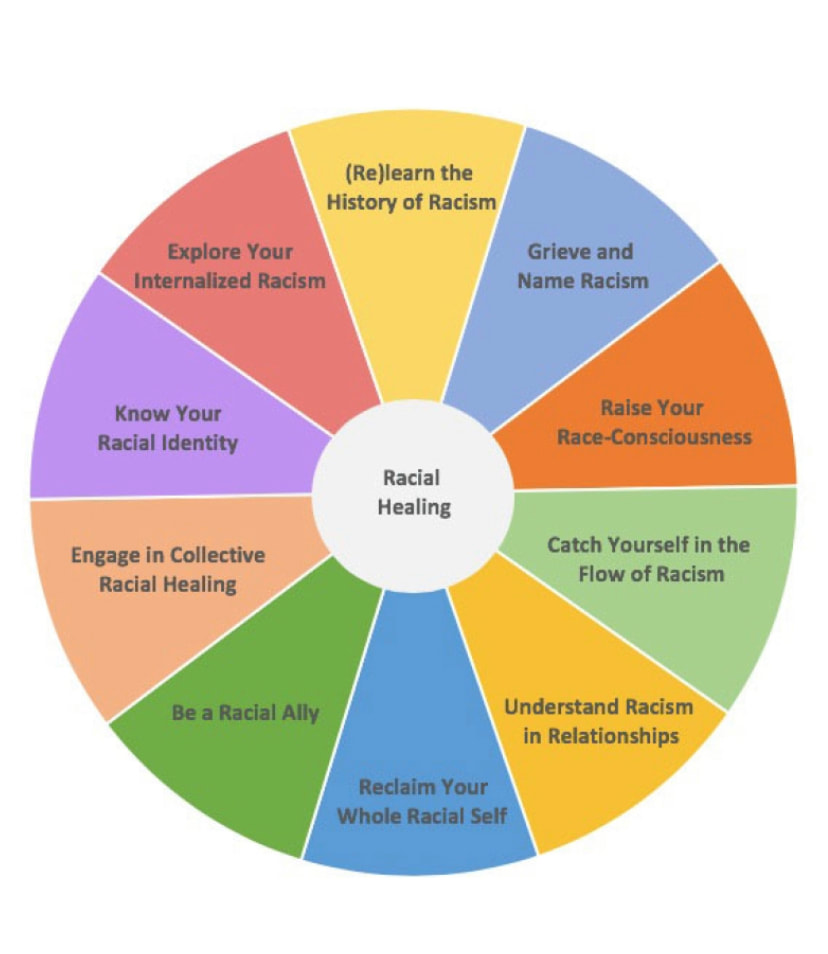 photo credit to Anneliese Singh from her book "Racial Healing Handbook" If you notice some strong feelings or body sensations as you are reading the phrase white supremacy below, know that is part of the journey. It is referring to collective whiteness/whiteness as a culture. Defensiveness tends to be present in any unexamined area of privilege or domination. What might you need to soothe your activated nervous system as we continue this dialogue? Some Core Elements of Anti-Racism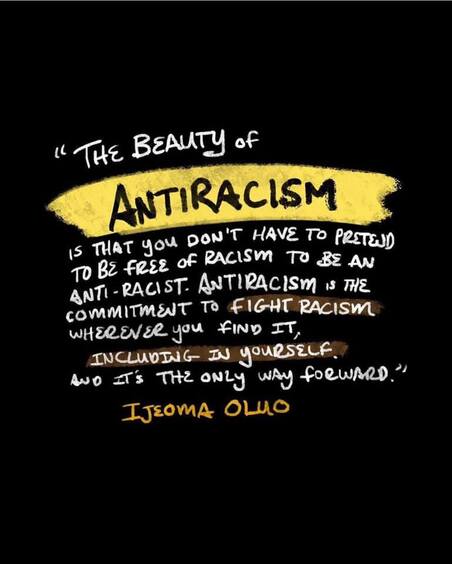 Here are a few things to consider that supports the idea that we are all indoctrinated into a racist society that has white supremacy (or anti-blackness) as its foundation:
We are NOT taught anti-racism or racial justice history in schoolIs some of our history surprising? Was it what you were taught in school? Did you think of white supremacy as a small group of people with extreme views wearing white hoods? I did for a long time. My eyes were opened when I started seeing it a system. A system that makes whiteness as the norm and superior. From white supremacy comes white privilege. White privilege is a series of advantages that makes life a little easier even if you don’t have other privileges. What have you learned about critical race theory? Check out this blog and video learn more. Being "Not Racist" Isn't the Same as Being Anti-Racist It is easy to say you are “not racist” but often that means you are neutral in discussions about racist policies and ideas. We can assume that we all have internalized racist ideas if we have spent any time in the United States. If you agree with some of the history described above it makes sense how we got to today’s Black Lives Matter movement and a cry for some radical change across economics, education, policing, and healthcare access. You can now decide what you want to do going forward. How important is true equality and equity. "Antiracism is the commitment to fight racism..."I like Ibram Kendi’s definition of anti-racism which is someone who supports an antiracist policy through their actions or expresses an idea based in antiracism. What do you think and do on a daily basis that supports or dismantles white supremacy and supports or challenges anti-racist policies? What if it is really indifference of most individuals on a daily basis that maintains white supremacy rather than extremists that are explicitly racist. Ready to Learn More About Anti-Racism Resources and Racial Justice?Do you want to dive deeper into these topics? Start to unpack your racial conditioning and start to commit to anti-racism in your daily life. Check out some of the videos created by Dr. Nathalie Edmond and the anti-racism resource page. Sign up for one of the upcoming anti-racism workshops. Finally, set up a consultation for your therapy staff, yoga instruction, educational team and more. In the meantime, check out this video of Dr. Edmond reading the untold story of racism by Ruth King. Perhaps, you might even adapt this resource to talk to your children or teams about racism! Want to connect to other resources and Dr. Edmond on social media click here Join the Antiracism revolution membership community 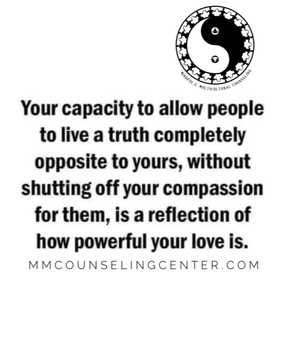 Part of what I have learned from Eastern philosophy is this concept of metta meditation. This is also known as loving kindness meditation. You repeat a couple of phrases and wish yourself well, a loved one well, and someone who is difficult in your life or caused you harm. The idea is to have the intention of wishing this person well. Sometimes it is easy to say it and sometimes it is difficult. Ultimately when we hold on to anger, it stops being healthy and can make us sick. I wish people well so that I don’t hold on to their pain and hate. People ask me when I make an anti-racist comment, video or blog and have people say harmful things to me why don’t I ignore it. Sometimes I do ignore it if I am not in an emotionally resourced place to address it. I think sometimes it does me more harm to ignore it. I carry their pain (anger, sadness, shame) in my body, in my energetic zone and that is not helpful to me. I find myself ruminating about what they said and all the ways I can challenge it. When I reply from a grounded place and am able to still see their humanity by wishing them well it frees me. I can move on more easily. I let go of someone winning or losing. Grounded doesn’t mean I don’t feel a lot of emotions. Rage or sadness is often simmering but it hasn’t hijacked my nervous system to the point that I can’t see the multiple truths. I remind myself that many people, particularly white people, have been taught a certain narrative about post racial United States and that if people work hard enough they can be successful as well. It seems that the concept of racism, individual and systemic racism, excites strong emotion in people to the point they have polarizing conversations where they cannot see the other person’s viewpoint. At extremes we forget that we are each human and start to attack each other rather than build curiosity and common ground. I love how Ruth King invites us to think about the following things when you are inviting people into conversation about race, rather than calling them out:
This is one of my favorite exchanges and gives me hope: Him: 94% of black deaths are caused by black men. Me: I wonder the context of this data. Hard for me to know without more than one line shown. Could you send an article?How do systemic issues contribute to individual issues while holding individuals accountable. Him: easy go to FBI crime statistics and research the truth Me: interesting to think that a system designed to police Black people is the only truth out there. Who gathers the info, what is it used for, who tends to be profiled? What data isn’t collected? What leads certain communities to be so impoverished and desperate and internalize racism. Just some of the things I tend to think about. Thank you for telling me your source. Him: funny. You change the topic without any research. You know the truth. All I know in this world is a victim stays a victim. Why have people succeeded in getting out but majority stay in sane circumstances Him: Democrat community gives data to the fbi. Keeping voting blue, then people stay impoverished Me: there is so much we could talk about. Too bad social media platform isn’t the place to have deep conversations that help people understand each other’s perspectives in my opinion. Thanks for engaging with me for a little while. I appreciate hearing how others come to understand things. So curious about the ways the Republican Party is trying to address poverty especially in black and Latinx communities to decrease the longstanding wealth gap. Will look for that in their platform. Him: historic minority and female unemployment and earnings. Opportunity zones in black poor areas. I would research the period between 40s to civil rights in 67’ and wonder why black Americans stopped prospering after civil rights as they did before civil rights. Very interesting info. I love a smart discussion 🙏❤️ Me: Wishing you well. If you are interested in learning more about having race based discussions from a mindful and compassionate place and invite people into conversation, sign up for one of my upcoming offerings. Next anti-racism workshop is 8/8. Full list can be found here. Check out my RAIN meditation to help take a breath and slow down when conversations cause you distress. |
AuthorNathalie Edmond is a licensed clinical psychologist specializing in the treatment of trauma from a mindfulness based and somatic approach. She is also a yoga teacher and anti-racism educator. She lives with her family in New Jersey. Archives
October 2023
Categories
All
|
 RSS Feed